Walk through any well-photographed listing online and something immediately catches your attention — or rather, nothing does. No piles on the kitchen counter. No shoes by the door. No personal photos crowding every surface. The home looks like it belongs to someone who has their life completely together, and more importantly, it looks like it could belong to the person scrolling through the photos.
That is staging, and it does not require a professional stager, a storage unit full of rented furniture, or a renovation budget. Most of what makes a home show beautifully is simply the removal of things and the deliberate arrangement of what remains. Here is how to get there without spending a lot to do it.
START WITH DECLUTTERING, NOT DECORATING
The instinct many sellers have is to add things — fresh flowers, new throw pillows, a bowl of lemons on the counter. Those touches help, but they will not matter if the underlying clutter is still there. Buyers cannot visualize themselves in a space that is full of someone else's life.
Go room by room and ask a single question about every visible item: does this need to be here for the next three months? If the answer is no, it goes. That means clearing kitchen counters down to one or two appliances, removing excess furniture that makes rooms feel smaller than they are, taking personal photos off the walls and shelves, and paring down closets so they look like they have room to breathe. Buyers will open closets. A closet that looks organized and spacious signals something important about the home.
The goal is not a bare, sterile space. It is a calm, neutral one that gives buyers room to mentally move in.
CLEAN LIKE YOU HAVE NEVER CLEANED BEFORE
Nothing staging can accomplish will overcome a home that does not feel clean. Grout lines, baseboards, window tracks, light switch plates, the area around stove burners — buyers will notice all of it, even if they cannot articulate why a home felt slightly off to them.
Deep cleaning is the highest-return item on this entire list. It costs almost nothing except time, and it changes how a space reads entirely. Pay particular attention to bathrooms and kitchens, which buyers scrutinize most carefully. Replace any caulk that has gone gray or moldy. Clean the oven. Wipe down cabinet fronts. Make every surface look like it has been cared for, because buyers are buying not just the house but their sense of how it has been maintained.
REARRANGE BEFORE YOU BUY ANYTHING
Before you spend a dollar on staging, rearrange what you already have. Most rooms can be made to feel larger and more intentional simply by repositioning furniture. Pull pieces away from the walls slightly. Create clear pathways through each room. Remove anything that interrupts the sightlines as you walk through the front door.
In living rooms, furniture arranged around a focal point — a fireplace, a view, a piece of art — feels more purposeful than furniture pushed to the perimeter. In bedrooms, the bed should be centered, with matching nightstands if possible. In dining rooms, the table should be centered under whatever light fixture is overhead, with enough clearance to walk comfortably around it.
Look at each room from the doorway — that is the angle that matters, because it is the first angle buyers will see. Adjust accordingly.
USE LIGHT STRATEGICALLY
Bright, evenly lit spaces feel larger and more inviting than dim ones. Open every curtain and blind before showings. Replace any burned-out bulbs, and make sure the bulbs throughout each room match in color temperature — mixing warm and cool bulbs in the same space creates an unsettling effect that buyers will notice even if they cannot name it.
If a room is naturally dark, add a lamp or two. Lamps bring warmth and life to a space in a way that overhead lighting alone cannot. You likely already own some — move them where they are needed most.
ADDRESS THE ENTRY AND THE CURB
Buyers form a strong impression before they ever step through the door. A front entry that feels welcoming and well-maintained signals that the inside will be the same. Sweep the porch or stoop, clean the front door, make sure the doorbell works, and add a simple clean mat. A potted plant or two on either side of the door can help, and they do not need to be expensive.
Inside the front entry, clear everything that typically accumulates there — coats, shoes, bags, mail. That first view inside the home, the one a buyer sees when they step through the door, sets the emotional tone for everything that follows.
NEUTRALIZE, DO NOT PERSONALIZE
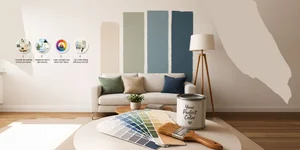
Strong paint colors, bold wallpaper, and highly personal decor narrow the pool of buyers who can picture themselves living in your home. If you have a room painted in a deep, saturated color, a few hundred dollars spent painting it a neutral is one of the better investments you can make before listing.
This does not mean everything has to be beige. It means giving buyers a canvas rather than a completed picture. Neutral walls, simple bedding, clean counters, and a few deliberate accessories — a vase, a plant, a piece of understated art — create a home that feels finished without closing off anyone's imagination.
WHAT YOU CAN SKIP
You do not need to rent furniture. You do not need to buy all new linens. You do not need to hire a professional stager unless your home is vacant or has unusual layout challenges. Most occupied homes already contain everything they need to show well — they just need editing, cleaning, and thoughtful arrangement.
The sellers who spend the most on staging are not always the ones who get the best results. The sellers who look at their home with fresh eyes and remove what does not need to be there almost always do.
A FINAL NOTE
The way a home shows directly affects how quickly it sells and what buyers are willing to offer. In the Northern Virginia market, where buyers often see dozens of homes before making a decision, presentation is one of the variables sellers can actually control.
If you are preparing to list and want specific guidance on what buyers in your area are responding to right now, the team at The Redux Group can walk you through it. Visit thereduxgroup.com to start the conversation.